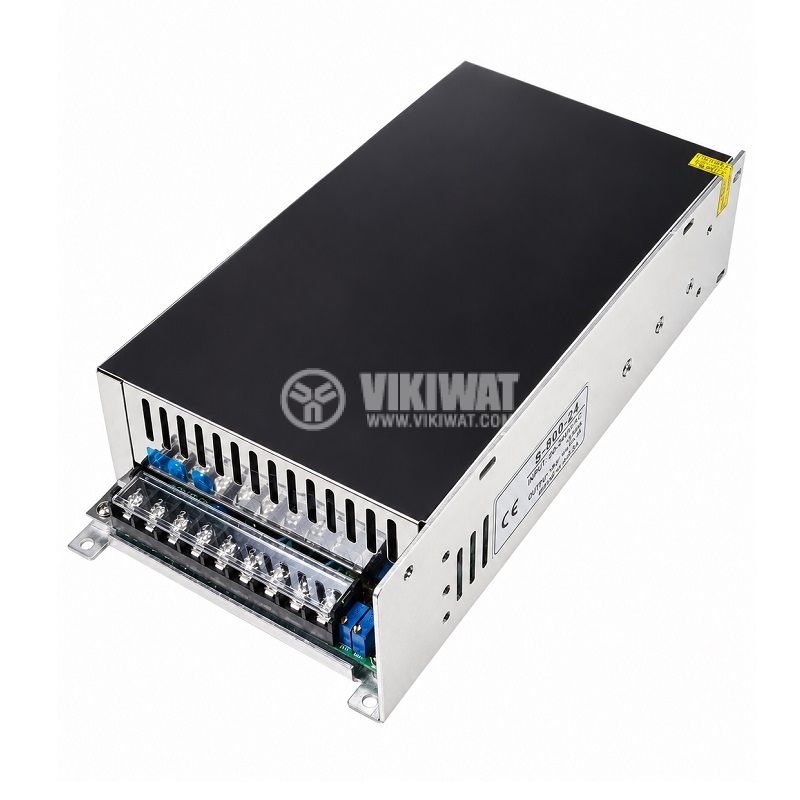
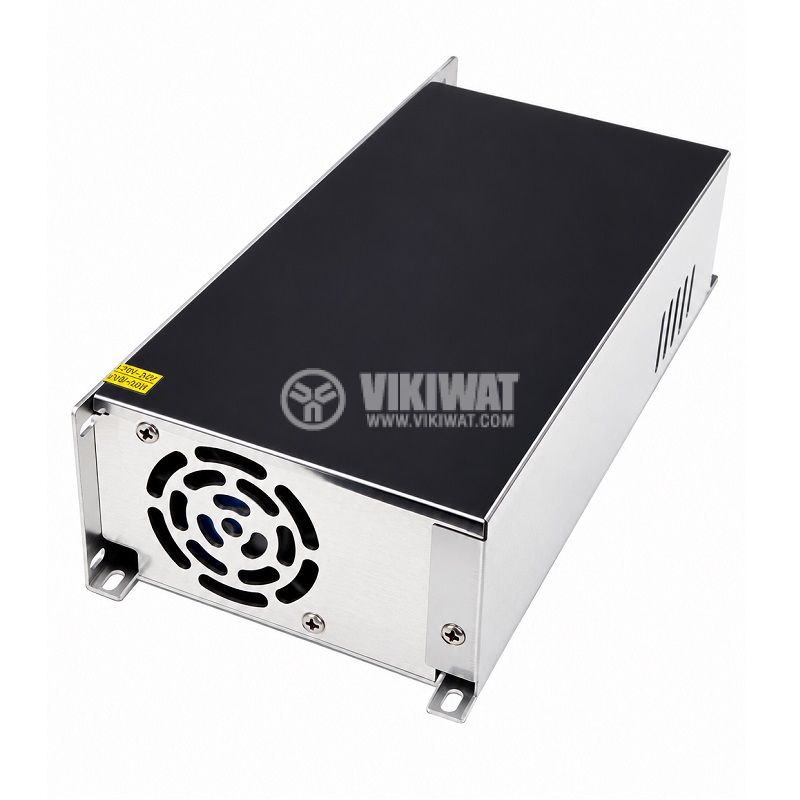

Switching power supplies are electronic devices designed to convert AC mains voltage into a stabilized DC voltage, which is required to power various electronic devices and electrical systems. They are widely used in industrial automation, LED lighting, video surveillance systems, controllers, CNC machines, communication equipment, security systems, and other applications that require a reliable DC power supply.
Switching power supplies are available with various output voltages, power ratings, and current capacities, making them suitable for use in residential, professional, and industrial applications alike.
Depending on their design and intended use, they may feature a metal or plastic housing, varying numbers of outputs, and different degrees of protection.
The switching power supply is connected between the electrical mains and the devices requiring power. The input terminals connect to the AC power source, while the output terminals supply direct current (DC) to the respective loads. When selecting a power supply, it is important to consider the required output voltage, the maximum current consumption, and the total power of the connected devices.
The power supply unit generates heat; therefore, when installing it inside enclosed boxes or cabinets, it is necessary to ensure free air circulation or provide forced cooling via a fan. Otherwise, the device—as well as the connected load—may overheat and become damaged.
If the unit is installed on a non-metallic surface, a third (grounding) wire must be connected to terminal 'E' on the terminal block. If it is installed inside a grounded metal cabinet or box, only the phase (L) and neutral (N) wires need to be connected to the terminal block.
