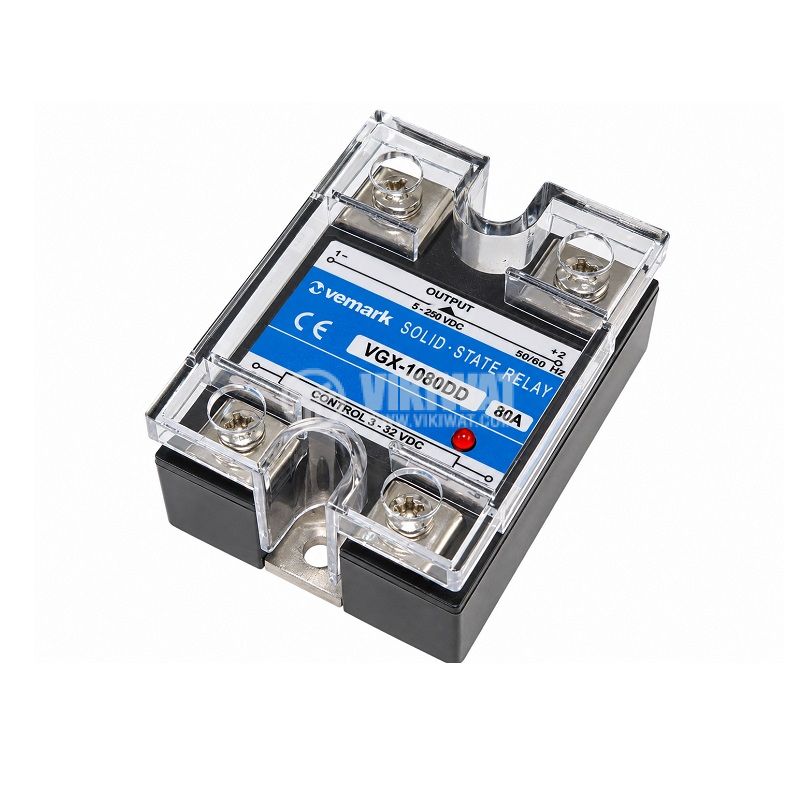
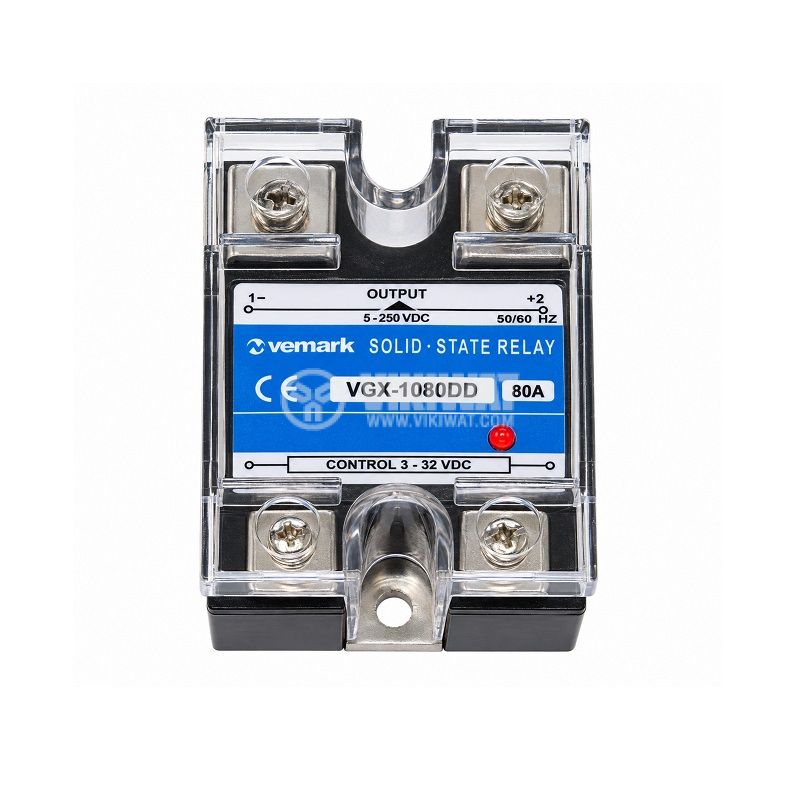
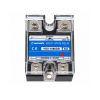

Solid-state relay VGX-1080DD, input 3–32VDC, output 5–250VDC, maximum switching current 80A, with LED indicator and heatsink mounting.

Buy on installment with tbi bank
for a total cart value over € 50
Availability
Available online
90 pcs.

On site in Vikiwat shop

The indicated quantity available in Vikiwat store - Plovdiv, 3 Mostova Str. Can be purchased only on the spot (cannot be ordered online).
the price on site may be different
11 pcs.
See quantities

Product with Speedy APS shipping possibility
- Often more affordable delivery than to a courier's address or office
- Orders over 20kg are not delivered to APS
-11%
online
€ 22.16
The offer is valid from 17.11.2026 to 17.11.2026
Buy on installment with tbi bank
for a total cart value over € 50
SKU: 100422